The place
Tanah Lot: the sea temple in brief
What Tanah Lot is, who is worshipped there, why much of the rock is artificial, what low tide means for visitors, and how to dress and behave at the temple.
Pick a sunset show date ↗Quick answer
Tanah Lot is a Hindu pilgrimage temple on a large offshore rock in Tabanan Regency, one of the seven main Balinese sea temples. The name means land in the sea. Its main deity is the sea god, and the temple is claimed as the work of the 16th-century figure Dang Hyang Nirartha. The rock can be reached on foot only at low tide. Over one-third of it is disguised artificial rock from a restoration programme that began after the 1980s.
Land in the sea
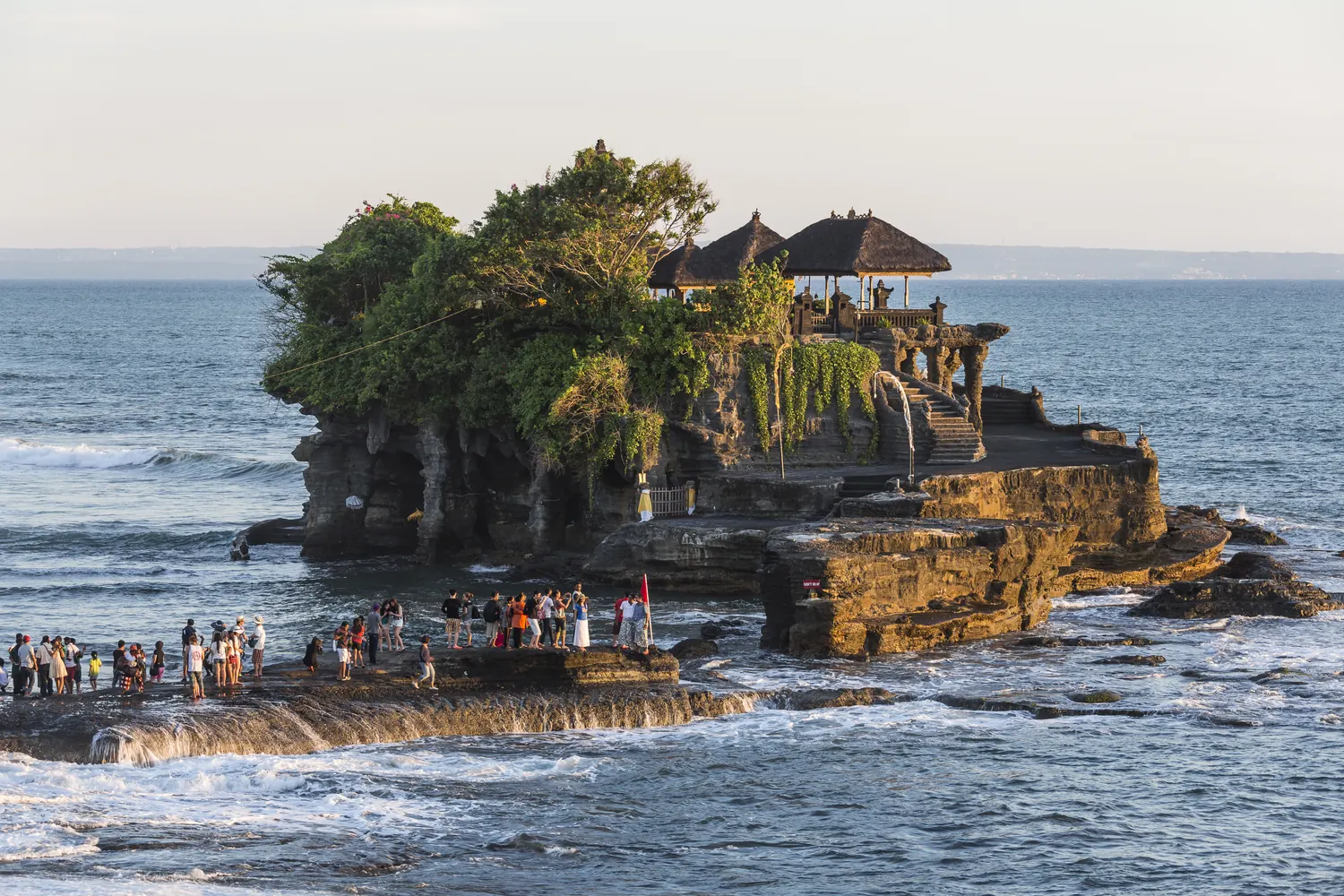
The name says most of it. English Wikipedia translates Tanah Lot as land in the sea, for the rock formation off Bali's southwestern coast that carries the temple Pura Tanah Lot. It describes the temple as an ancient Hindu place of pilgrimage and a popular icon for photography. It is one of the seven main Balinese sea temples, and sea temples as a class are built to appease the gods and deities of the sea. So the setting is the point: a shrine placed where the land gives out.
Who is worshipped here
The main deity is Dewa Baruna, also called Bhatara Segara, the sea god or sea power. The religious figure Dang Hyang Nirartha is also worshipped here. Tradition credits him with the temple: Wikipedia writes that Tanah Lot is claimed to be his work, and that he allegedly spent a night here on his extensive travels through Bali, Lombok and Sumbawa. Note the careful words. The story matters to the people who pray here, and it is best told as a story, not as a building record.
The rock that isn't all rock
Here is the fact most visitors never hear. In the 1980s, the rock face started to crumble, and the area around and inside the temple became dangerous. The Japanese government then provided a loan to the Indonesian government to conserve the temple and other significant places around Bali. As a result of that programme, Wikipedia says, over one-third of Tanah Lot's rock is disguised artificial rock. It doesn't make the place less sacred to those who worship here. It does mean the view you photograph has been carefully kept standing.
Tide and access
The temple rock is accessible on foot only at low tide, so what you can do depends on the moon as much as your schedule. At high water, you look at the temple from the shore across the sea. At low tide, people cross the wet reef towards the rock, which is slippery, so wear shoes that grip. A tide table will show you which you are likely to get. Your evening at the stage doesn't depend on this at all, since it takes place on land in the temple area.
The arch and the small shrines
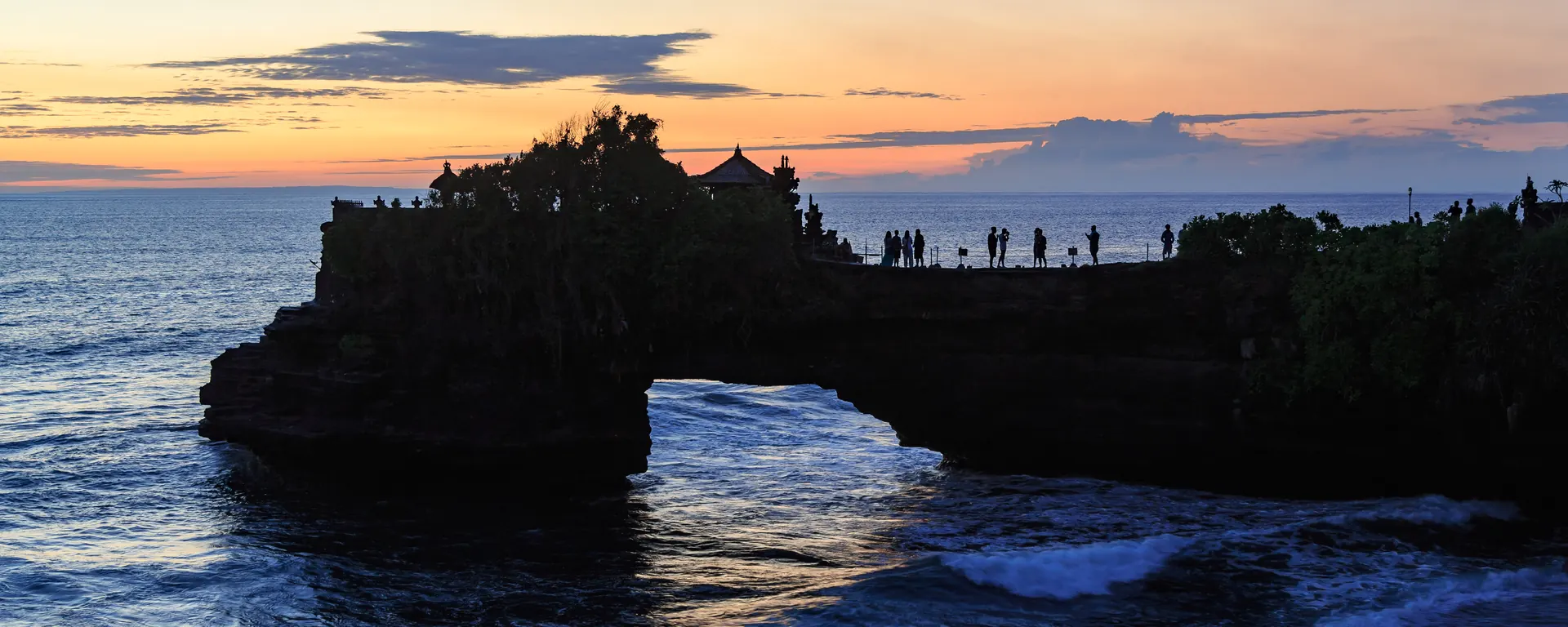
Tanah Lot is not alone on this shore. On the way to the show's stage you pass Pura Enjung Galuh, Pura Batu Bolong and Pura Batu Mejan. Batu Bolong is the one with the natural arch of rock, where the surf runs through the opening below. It makes a fine place to stand for a while if you arrive early. Keep to the marked paths and stay well back from the edge when the sea is up, because waves here break hard against the rock.
Dress and manners
This is a working place of worship, even with the stalls and the cameras around it. Balinese worshippers arrive in ceremonial dress, with a kamen wrapped at the waist and a sash tied over it. As a visitor you are not expected to dress that way unless a sign or attendant asks you to, but keep shoulders and knees covered. Parts of a temple are reserved for those who come to pray, so obey signs and staff, keep your voice down, and never walk through a ceremony or in front of someone at prayer.
Crowds and timing
A 2019 study cited by Wikipedia puts Tanah Lot among the most visited places in Indonesia, with an average of 500,000 tourists each year. Late afternoon is the obvious draw, because of the sunset, and that is also when the show runs. If you want calm for the temple itself, the trade-off is daylight: come earlier in the day, or accept a sociable shore. Restaurants sit on the mainland clifftops, so you won't go hungry, but plan your meal around the show rather than during it.
Seeing the temple and the show together
The simplest plan is to arrive with time to walk the shore in daylight, buy the temple ticket if your option doesn't include it, and reach the stage at least 15 minutes before the start. Some options add a guided temple tour, which suits you if you would rather have the place explained than read about it here. Whichever you choose, the rock and the stage make a natural pair: first the place the sea temple stands, then the story told beside it.
Read next: Getting to Tanah Lot by road
Sources